Industry news
How to choose snap hooks for ANSI Z359 compliant lanyards
Introduction
When designing or sourcing fall protection lanyards, selecting the correct snap hook is critical for meeting ANSI Z359
compliance requirements. The snap hook is the main connector between the harness, lanyard, and anchorage — and
any failure in this component can compromise the entire fall arrest system.
For safety harness manufacturers and PPE OEM buyers, understanding ANSI Z359 requirements helps ensure product
certification, safety performance, and market acceptance.
What Is an ANSI Z359 Snap Hook?
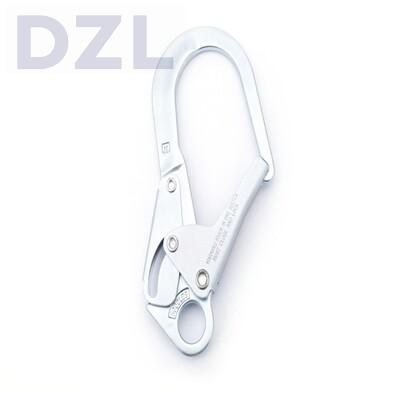
Under the ANSI/ASSP Z359 standard, a snap hook is defined as a connector with a self-closing gate that automatically retains the attached object after connection.
For fall protection use, the key requirement is clear:
Only self-locking (automatic locking) snap hooks are permitted for personal fall arrest systems.
This means:
The hook must close automatically
It must lock without manual holding force
It must require multiple deliberate actions to open
Non-Locking snap hooks are not allowed in ANSI Z359 compliant lanyards due to the risk of accidental disengagement (roll-out).
Key ANSI Z359 Requirements for Snap Hooks
When selecting snap hooks for compliant lanyards, OEM manufacturers must evaluate the following:
1. Locking Mechanism (Most Important)
Must be self-locking / double-locking type
Requires at least two deliberate actions to open the gate
Prevents accidental opening from contact or vibration
This is a core ANSI requirement for all fall arrest connectors
2. Minimum Strength Rating
Snap hooks used in ANSI systems must meet:
Minimum tensile strength: 5,000 lbs (≈22 kN)
Gate must withstand 3,600 lbs (≈16 kN) without failure or deformation
This ensures the connector can survive extreme dynamic fall forces.
3. Gate Strength & Side Load Resistance
Modern ANSI Z359 updates require snap hooks to withstand:
Gate force in multiple directions
Transverse (side-load) conditions
Dynamic drop testing requirements
This helps prevent failure when the hook is twisted or misaligned during real-world use.
4. Compatibility with D-Rings and Anchors
Snap hooks must be properly matched with:
Harness D-rings
Anchor points
Lanyard ends
Improper sizing can cause “roll-out” failure, where the gate is unintentionally pressed open.
Common Mistakes in Snap Hook Selection
Many OEM buyers fail certification due to avoidable mistakes:
╳ Using non-locking hooks
Not allowed under ANSI Z359 for fall arrest systems.
╳ Mixing incompatible sizes
Large gate hooks on small D-rings can cause gate loading.
╳ Ignoring gate strength markings
Hooks must clearly indicate compliance ratings.
╳ No system-level testing
Snap hooks must be tested as part of the full lanyard assembly.
Aluminum vs Steel Snap Hooks (Quick OEM Insight)
For ANSI Z359 lanyards, both materials can be used — but selection depends on application:
Steel snap hooks → higher strength, industrial use, heavy-duty systems
Aluminum snap hooks → lightweight, comfort-focused applications
Many OEM manufacturers use steel as default for ANSI compliance stability.
OEM Buyer Checklist (Very Important)
Before sourcing snap hooks, ask your supplier:
Is it ANSI Z359 certified or tested?
Is it double-locking (self-locking) design?
Does it meet 5,000 lbs tensile strength?
Is gate strength tested (3,600 lbs requirement)?
Can it pass system-level lanyard testing?
Is OEM customization available?
Why Snap Hook Selection Impacts Your Brand
For safety harness manufacturers, snap hook quality directly affects:
Product certification approval
Customer safety perception
Warranty risk
Market acceptance in US/EU
A single weak connector can cause full system failure, even if the harness is high quality.
DZL SAFETY OEM Capability
As a professional fall protection hardware manufacturer, DZL SAFETY provides:
ANSI Z359 compliant snap hooks
Double locking / auto locking systems
Steel and aluminum options
OEM branding & customization
Stable mass production for global buyers
We support safety harness manufacturers and PPE distributors in building fully compliant fall arrest systems.
Conclusion
Choosing the right snap hook for ANSI Z359 compliant lanyards is not just a design decision — it is a safety
and certification requirement.
The key is simple:
Always use self-locking, high-strength, tested connectors that match system requirements.
CTA
Looking for a reliable ANSI Z359 snap hook supplier?
DZL SAFETY provides OEM-grade fall protection hardware with stable quality and global compliance support.
Contact us for samples and quotation.
WhatsApp: +86 18003328600
E-mail: sales@fallarresthardware.com
RELATED NEWS
Categories
Latest News
Contact Us
Contact:
Phone: 8618003328600
E-mail: sales@fallarresthardware.com
Whatsapp:8618003328600
Add: Cangzhou city, Hebei Province, China