Application
When safety harness manufacturers search for terms like “safety harness front and back D ring”, they are typically
looking for more than just hardware—they are sourcing critical load-bearing components that directly impact the
performance, certification, and user safety of the entire harness system.
In any full body harness, front and back D-rings are essential connection points within the Components of Fall
Protection System. Each position serves a distinct purpose, and understanding their roles is key for both product
design and procurement.
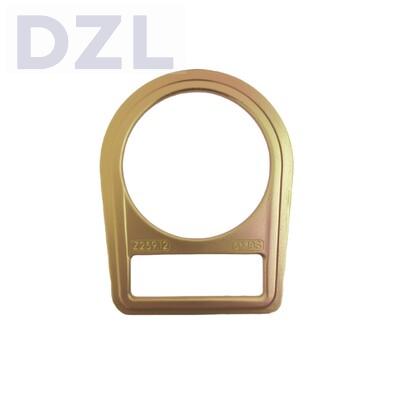
Front D-Ring (Sternal Attachment)
The front D-ring, located at the chest, is primarily used for:
Ladder climbing systems
Rope access and positioning
Vertical guided type fall arrest systems
For manufacturers, this component must ensure ergonomic positioning and easy accessibility, while maintaining
high tensile strength. It is often integrated with 50mm webbing and requires precise stitching reinforcement to prevent
load concentration.
A well-designed front D-ring enhances user balance and comfort, especially in climbing applications where forward
attachment is necessary.
Back D-Ring (Dorsal Attachment)
The back D-ring, positioned between the shoulder blades, is the primary fall arrest connection point in most safety
harnesses. It is widely used with:
Energy absorbing lanyards
Self-retracting lifelines (SRL)
General construction safety systems
From a B2B sourcing perspective, the dorsal D-ring must meet strict requirements:
Minimum breaking strength (typically ≥ 22kN)
Smooth edges to avoid webbing abrasion
Consistent forging quality for certification compliance
This component plays a central role in the Components of Fall Protection System, as it directly determines how effectively
fall forces are distributed across the body.
What Buyers Care About Most
For global PPE brands and harness factories, selecting the right D-ring supplier involves several key considerations:
Material Quality: Alloy steel vs. carbon steel, corrosion resistance
Load Performance: Verified strength through testing and certification
Compatibility: Seamless integration with standard webbing sizes (45mm / 50mm)
Surface Finish: Galvanized or coated to extend service life
Consistency: Stable quality across bulk production
OEM & Production Considerations
Manufacturers often require customized D-ring solutions to match different harness designs. Common OEM needs include:
Custom shapes (D-shape, O-shape)
Logo marking (laser or stamping)
Special coatings for harsh environments
Integration with padding or structural webbing
Choosing a reliable supplier ensures not only product quality but also smoother certification processes and faster time-to-market.
Conclusion
For any safety harness system, the front and back D-rings are not optional—they are core structural components that define
safety performance. As demand for certified fall protection equipment continues to grow globally, sourcing high-quality D-rings
becomes a strategic priority for manufacturers.
If you are developing or upgrading your harness product line, investing in the right front and back D-ring components will
directly enhance both safety and market competitiveness. Contact now↙↙↙
WhatsApp: +86 18003328600
E-mail: sales@fallarresthardware.com
RELATED PHOTO
Categories
Latest News
Contact Us
Contact:
Phone: 8618003328600
E-mail: sales@fallarresthardware.com
Whatsapp:8618003328600
Add: Cangzhou city, Hebei Province, China