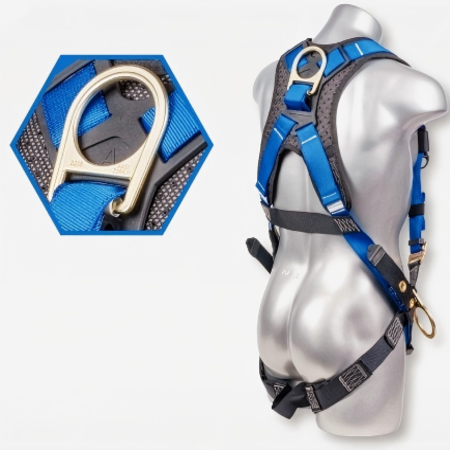
Full body harness
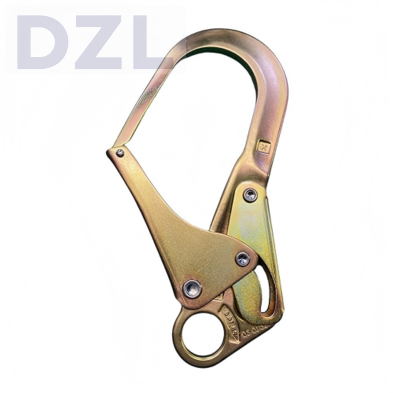
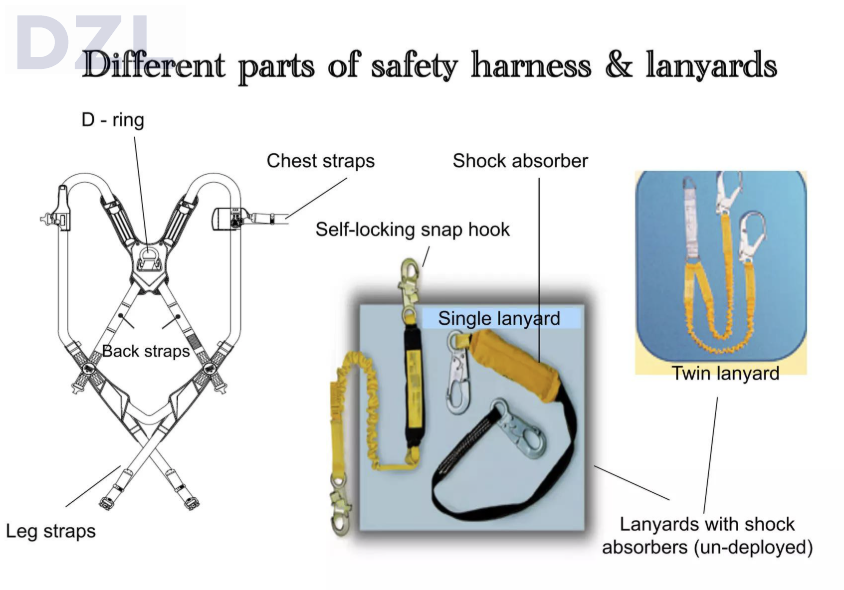
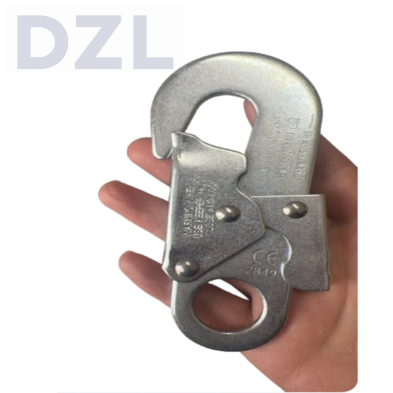
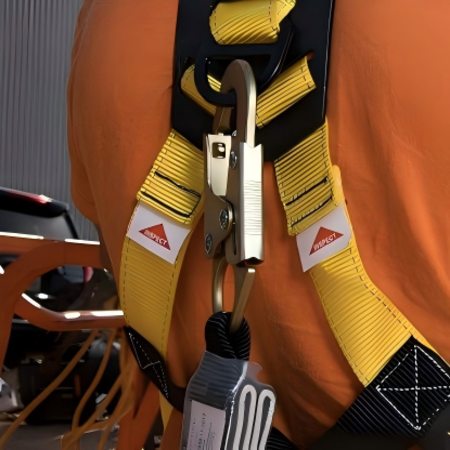
In a personal fall arrest system (PFAS), connectors such as fall arrest hooks, snap hooks, and Scaffold Hooks play a critical role in ensuring worker safety at height. To prevent accidental disengagement during operation, modern fall protection connectors must follow strict safety design requirements.
One of the most important safety features is the self-closing and self-locking latch mechanism, which ensures the connector remains securely attached to the anchorage or connecting hardware during use.
Key Safety Requirements for Personal Fall Arrest Latches
1. Self-Closing and Self-Locking Design
A personal fall arrest hook must be designed with a self-closing and self-locking gate (latch).
This mechanism automatically closes and locks after the connector is attached to an anchorage point or D-ring.
In most certified fall protection hooks, the gate requires two independent actions to open, which greatly reduces the risk of accidental opening caused by vibration, movement, or contact with surrounding structures.
Typical examples include:
Double-locking snap hooks
Automatic locking scaffold hooks
Triple-action safety Carabiners
These designs ensure that the latch cannot open unintentionally while the worker is moving or repositioning.
2. Prevention of Accidental Disengagement
The latch design must prevent accidental opening or disengagement caused by contact between the hook and the connected components.
For example, if a fall arrest snap hook rubs against a D-ring, anchor plate, or structural edge, the latch must remain securely locked.
A compliant fall protection connector should:
Maintain secure engagement under dynamic load
Prevent gate roll-out or accidental gate pressure
Maintain locking integrity even during sudden movement or impact
This requirement is essential to avoid roll-out accidents, which are a known hazard in fall protection systems.
3. Minimum Tensile Strength Requirement
To ensure reliability during a fall event, fall arrest hooks must meet strict strength requirements.
The connector must have a minimum tensile strength of 5,000 lbs (22.2 kN).
This high load capacity ensures that the connector can withstand the dynamic forces generated during a fall arrest, protecting both the worker and the connected equipment.
Common materials used to achieve this strength include:
Forged alloy steel
Heat-treated carbon steel
High-strength aluminum alloy (for lightweight hooks)
DZL SAFETY typically perform static tensile testing and dynamic fall testing to verify compliance.
4. Connector Compatibility
Another critical safety rule is connector compatibility.
Fall arrest hooks must not be connected to objects with incompatible shapes or dimensions, as this can place pressure on the latch and cause accidental disengagement.
Unsafe connections may occur when attaching hooks to:
Oversized structural members
Small diameter rings
Flat surfaces that press directly against the latch
Non-rated anchor points
For safe operation, connectors should only be used with compatible anchorage connectors, D-Rings, or certified anchor hardware.
Proper compatibility prevents gate loading, roll-out, and unintended release.
Why High-Quality Fall Arrest Hooks Matter
In industrial environments such as:
Construction sites
Scaffolding systems
Tower maintenance
Wind turbine service
Oil & gas platforms
workers rely on fall protection hooks as a critical life-saving component.
Poorly designed connectors can lead to:
Accidental disengagement
Gate failure
Connector deformation under load
That is why professional PPE manufacturers and safety equipment distributors choose certified fall arrest hardware that meets international safety standards.
Choosing a Reliable Fall Arrest Hook Manufacturer
When sourcing OEM fall arrest hooks, buyers should evaluate:
Minimum tensile strength (≥22.2 kN)
Automatic locking gate design
Compatibility with harness D-rings
Material and heat treatment
Third-party testing and certification
Reliable manufacturers can also provide custom fall protection hardware, including:
Snap hooks
Scaffold hooks
D-rings
Fall arrest connectors
These components are widely used by safety harness manufacturers, PPE brands, and industrial safety distributors worldwide.
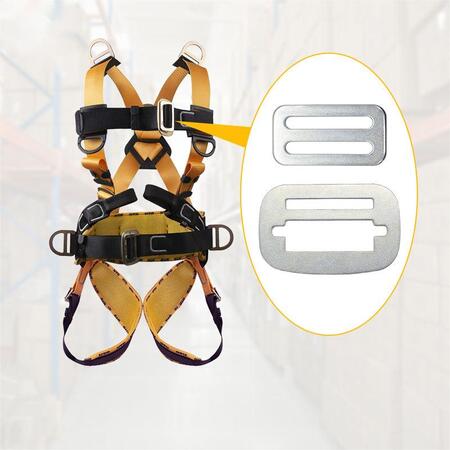
RELATED PHOTO
Categories
Latest News
Contact Us
Contact:
Phone: 8618003328600
E-mail: sales@fallarresthardware.com
Whatsapp:8618003328600
Add: Cangzhou city, Hebei Province, China